

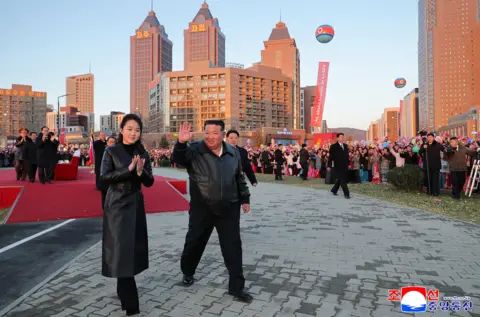
During threats against South Korea and promises to expand the atomic arms programme, a key uncertainty lingered at the latest political assembly: would the leader's young daughter be named as the successor?
Even though unquestionable news failed to emerge during the congress, it has sparked a widespread conversation about the young girl's viability as the next ruler of the populous state, a dictatorship exclusively ruled by the Kim family bloodline.
Growing Visibility and Rumors
The teenager has become progressively prominent in official broadcasts next to her parent. Nonetheless, plenty about her is still a secret. North Korea has never publicly published her full name or verified her date of birth.
Her existence was initially revealed to the world in 2013. From that point, she is generally believed to be in her early teens, in part on intelligence assessments.
Signs of Heir Apparent
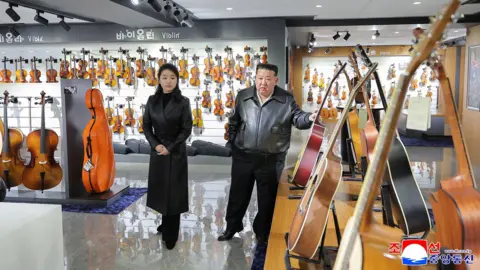
Experts point to several significant signs. Her prominent public sightings—typically centered in the camera view—and the use of honorific titles traditionally set aside for the ruler are seen as clear signals.
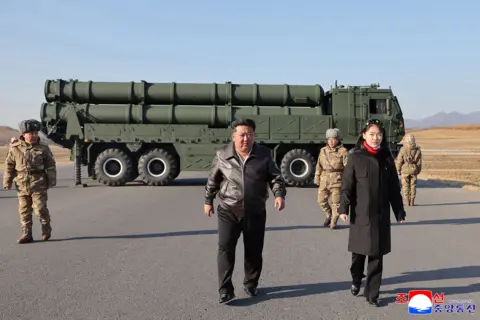
Furthermore, her familiarity with the military is viewed an additional important factor. She has reviewed soldiers and hardware together with her father. On several occasions, high-ranking officers have been observed stopping near her to whisper at military displays.
"The state media is employing language exclusively used for the ruler. It reinforces her own cult of personality," notes one respected commentator.
Such strategic indoctrination is deemed crucial, as supreme authority in North Korea rests with dominance over the armed forces. To be a legitimate heir, she must present herself as a capable leader.
Controversy Over Gender and Tradition
Nevertheless, a considerable counter-argument persists. Some former officials believe that North Korea's profoundly male-dominated society presents an major hurdle for a woman leader.
It is noted that females at all tier face difficulties for equitable recognition. Women commanders in senior roles are very rare. Everyday superstitions also highlight these biases.
"If they do, they end the journey then go to the rear of their car and expectorate three times to remove the misfortune," describes a one-time DPRK diplomat.
Evolving Cultural Realities
Conversely, other researchers argue that the status of women in North Korea has transformed significantly since the 1990s famine.
During that crisis, as the official sector weakened, females often became the main providers, engaging in private business. This has allegedly led to a gradual transformation in societal perceptions.
One expert who has spoken to over 120 former residents suggests that it is currently less unusual to see women in leadership roles within the state.

"We must not think of North Korea with our logic. We must see them as the Joseon dynasty," notes the analyst. "What person would dare defy an individual of Paektu blood who is taking the supreme position?"
Strategic Maneuvers
Recent party moves are also being analyzed. The promotion of Kim Yo Jong, the leader's sister, to a key propaganda position is seen by some as a move to install a protector for the possible successor.
Ultimately, experts are in disagreement. Some view the focus on Ju Ae as a calculated move to improve the leader's reputation and prepare the ground for another hereditary transfer of power. Others insist the indicators of her preparation are far too strong to dismiss.
Regardless, the speculation in and of itself may achieve a goal for the leadership, ensuring international focus firmly locked on the enigmatic Kim leadership.


